- Dog law
- Poland
- Microchip
How to Register a Dog in Poland: 2026 Guide
On this page
TL;DR: Dog registration in Poland is moving to KROPiK, a national register operated by ARiMR. The Act was published on 10 June 2026, but most owner duties start two years later. Owners do not need to panic in 2026, but they should check whether their dog has a readable microchip, keep current database details accurate and follow official launch guidance.
Poland has approved a major change to dog identification. KROPiK, short for the National Register of Marked Dogs and Cats, is intended to connect a permanent microchip number with reliable information about an animal and its keeper. The goal is practical: make it easier to return lost animals, identify responsibility and reduce abandonment.
The change has produced confusing headlines. Some imply that every owner must rush to a clinic now. Others mix the future national register with private chip databases or the EU pet passport. This guide separates what has already happened from what an owner will need to do later.
The legal starting point is the KROPiK Act published in the Journal of Laws on 10 June 2026. The Ministry of Agriculture's explanation of the legislation describes the national system and the reason for compulsory marking. Rules and technical instructions may become more detailed before launch, so official sources matter more than social-media summaries.
What exactly is KROPiK?
KROPiK is a central state register for marked dogs and cats. ARiMR, the Agency for Restructuring and Modernisation of Agriculture, will operate it. A microchip supplies the unique identifier, while the register connects that number to the animal and the person responsible for it.
That distinction matters. A chip is not a GPS tracker and does not transmit a live location. It is a small passive transponder read by a compatible scanner at close range. When a shelter, clinic or authorised service scans a found dog, the number can be checked against a register. Recovery works only if the entry exists and the keeper's contact details are current.
Poland already has private databases. They have helped many dogs return home, but they are separate systems with different procedures. KROPiK creates an official national record instead of asking a finder to guess which database holds a number.
For owners who arrange walks and controlled introductions through Fennaro, registration is not a replacement for safe handling. It is a recovery layer for the moment a lead breaks, a gate is left open or a frightened dog bolts.
When does mandatory registration begin?
The Act was published on 10 June 2026. Its main provisions take effect two years after publication, placing the broad launch in June 2028. A few administrative provisions follow their own schedules, and the rollout will require implementing guidance and working digital services.
The practical message in August 2026 is simple: the law exists, but the general public should not treat every future duty as if it were already active today. Watch official ARiMR and government announcements as 2028 approaches.
The President of Poland's legislative summary confirms the two-year commencement period and describes a three-year free-registration window for animals that were already marked. That window is meant to bring existing chipped animals into the national system without making their keepers pay a registration fee.
Do not delay urgent identification because the state system is still being prepared. If your dog has no chip and has a real risk of escaping, discuss microchipping with a veterinarian now and register it in a reputable existing database. Keep the implantation certificate and chip number. Those records will help when KROPiK registration becomes available.
Which dogs will have to be microchipped and registered?
The national system is designed to cover dogs kept in Poland, not only pedigree animals, restricted breeds or dogs adopted after a particular date. The identification duty is therefore much broader than the permit rules discussed in our guide to restricted dog breeds in Poland.
The implementation route may differ according to circumstance. A puppy can be marked during an early veterinary visit. An older dog may already carry a chip that needs to be read and associated with KROPiK. A dog arriving from another EU country may have a compliant chip and passport, but the keeper may still need to complete the Polish national registration step once the rules apply.
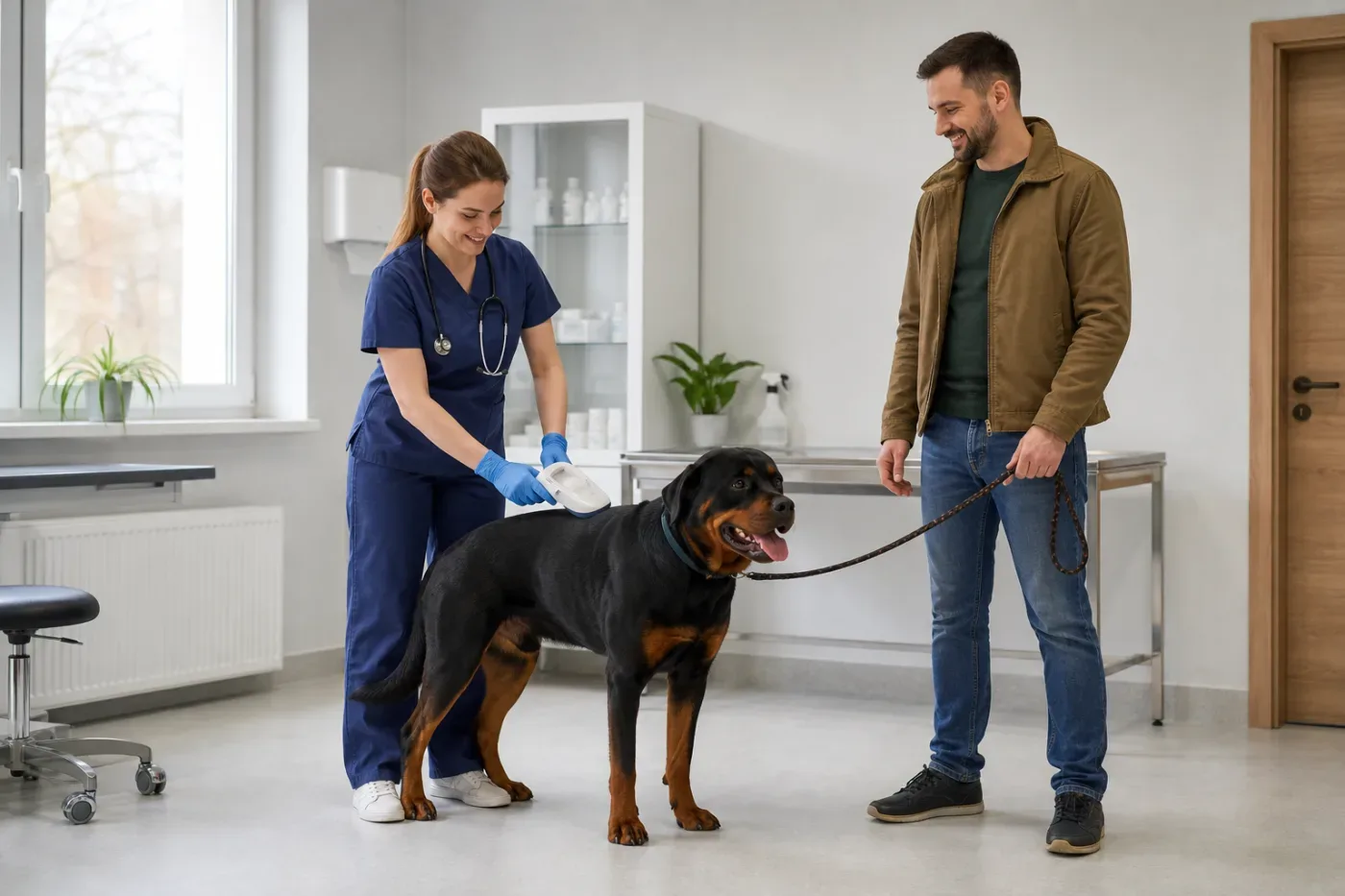
A veterinarian should scan before inserting anything. Implanting a second chip without checking can create conflicting records. If an existing number cannot be read, the clinic can advise on the safest documented solution.
KROPiK also covers cats, but the timelines and triggers are not identical in every situation. This article stays with dog-owner duties. Owners of both species should rely on the final official instructions rather than assuming the same deadline applies to every animal.
What information will an owner need to provide?
Expect the registration to connect three groups of information: the animal, its identifier and the keeper. The Act sets the legal framework, while the launch process will determine the exact owner-facing form.
Useful records to prepare include:
| Record | Why it matters |
|---|---|
| Microchip number | It is the permanent key linking the dog to the entry |
| Keeper identification | It shows who is responsible for maintaining the record |
| Current contact details | They allow a finder or authorised service to reach the keeper |
| Dog description | Name, sex, breed or type and other details help prevent a mismatch |
| Veterinary documents | They support identification and, separately, travel requirements |
Treat the chip number like an important document. Save it in more than one secure place, but do not publish full ownership documents online. When a dog goes missing, scammers sometimes exploit public posts. A genuine finder can take the dog to a clinic or shelter for scanning without needing a photo of your passport.
How much will KROPiK registration cost?
The Act sets a maximum fee through a formula linked to the previous year's average salary rather than a permanent flat amount. That is why confident claims that registration will always cost one exact number can mislead owners.
The official summary also provides an important exception: registration is free during a three-year period for a dog or cat that was already microchipped before the relevant registration process. Keep proof of an existing chip and watch for the precise procedure.
Veterinary services are separate from the register fee. A clinic may charge for the appointment, examination and chip implantation. Ask what the quoted price includes. A very low offer is not useful if nobody checks the number, records it correctly or explains how to update the entry after a move.
Is a KROPiK entry enough for travel within the EU?
No. National registration and international travel serve different purposes. The European Commission's guidance on travelling with pets explains the main EU requirements: identification, a valid rabies vaccination and an EU pet passport for movements between member states, with additional conditions in some cases.
Timing can matter. The Polish Chief Veterinary Inspectorate's travel guidance explains that identification must meet the travel rules and that vaccination validity depends on when the chip was implanted or read. Ask an authorised veterinarian well before a trip. A last-minute chip and vaccination may not make a dog immediately eligible to cross a border.
KROPiK should improve national traceability, but it does not replace the passport, vaccination record, destination-country checks or airline requirements. Owners moving permanently should also ask how a change of address and keeper status must be recorded.
What should owners do before the system launches?
Use the preparation period for a calm records check:
- Ask a veterinarian to scan the dog at the next routine visit and confirm the displayed number.
- Compare that number with the certificate, passport and current private-database entry.
- Update your telephone number and address wherever the chip is currently registered.
- Keep proof of when the dog was marked, especially for the future free-registration window.
- Follow ARiMR, the Ministry of Agriculture and the Journal of Laws for the final KROPiK procedure.
- Avoid unofficial websites that request payment before the public service is ready.
This is also a useful moment to review everyday escape prevention. Check collar hardware, tags, garden gates and lead clips. For powerful dogs, use equipment that fits the individual rather than choosing by breed label. Our safe big-dog meetup guide explains how distance, parallel movement and planned exits lower risk during social walks.
What happens when a registered dog changes home or goes missing?
A register becomes unreliable when changes are not recorded. A move, a new telephone number, transfer to another keeper, the dog's death or a reported loss must lead to an update through the authorised process. The detailed owner workflow will be clearer when KROPiK launches.
For a missing dog, do not wait for the database alone. Contact local shelters, municipal guards, veterinary clinics and organisations that handle found animals. Give them the chip number privately. Share a current photo and the area where the dog disappeared. If the dog is nervous or reactive, tell searchers not to chase it.
If ownership changes, both sides should keep a clear transfer record. Passing over a passport is not the same as updating a national register. The old keeper should not remain attached to a dog they no longer control, and the new keeper should not discover months later that recovery calls go to somebody else.
How does registration support safer dog meetups?
Identification does not decide whether two dogs are compatible. It does, however, support responsible ownership around every meetup. A person who keeps records current is more likely to have thought about emergency contacts, veterinary needs and safe equipment.
Before allowing contact, discuss size, play style, recall and triggers honestly. Start with a parallel walk and watch whether both dogs can disengage. Our guide to introducing two dogs safely gives a practical first-meeting sequence, while the guide to dogs playing or fighting explains pauses, role reversals and body tension.
KROPiK will close an important identification gap, but the register works only when owners maintain it. Prepare the documents now, use official dates and treat every future update as part of keeping your dog safe. When you are ready to arrange a structured walk with a compatible dog, see how to get Fennaro.
Common questions
Is microchipping a dog mandatory in Poland in 2026?
The KROPiK Act has been published, but most of its registration and microchipping duties start two years after publication. In August 2026, owners should prepare and keep existing chip details accurate. Separate identification rules already apply when a dog travels internationally with an EU pet passport.
When will KROPiK start in Poland?
Most provisions of the KROPiK Act take effect two years after its publication on 10 June 2026, so the main system is expected to start in June 2028. Some administrative provisions follow different dates. Owners should check official ARiMR guidance as the launch approaches.
Do I need to register a dog that is already microchipped?
A microchip alone is only an identifier. Under KROPiK, the chip number must be connected to the dog and keeper in the official register. The Act provides a three-year period in which registering an already chipped dog is free, once the relevant duties are in force.
Who can insert a dog microchip for KROPiK?
The new system is designed around authorised veterinarians, who identify the animal and enter the required information in KROPiK. Do not buy a chip and try to insert it yourself. A veterinarian must also check whether a readable chip is already present before another one is considered.
Is KROPiK the same as an EU pet passport?
No. KROPiK is Poland's national register for marked dogs and cats. An EU pet passport is a separate travel document issued by an authorised veterinarian. International travel also involves rabies vaccination and identification timing rules, so registration alone does not make a dog ready to travel.
What should I do if my dog is lost before KROPiK starts?
Report the loss to the database where the current chip is registered, local shelters, municipal services and nearby veterinary clinics. Share a clear photo without publishing sensitive ownership documents. Confirm that your telephone number is current, because a chip helps only when someone can connect its number to you.