September 26, 2026
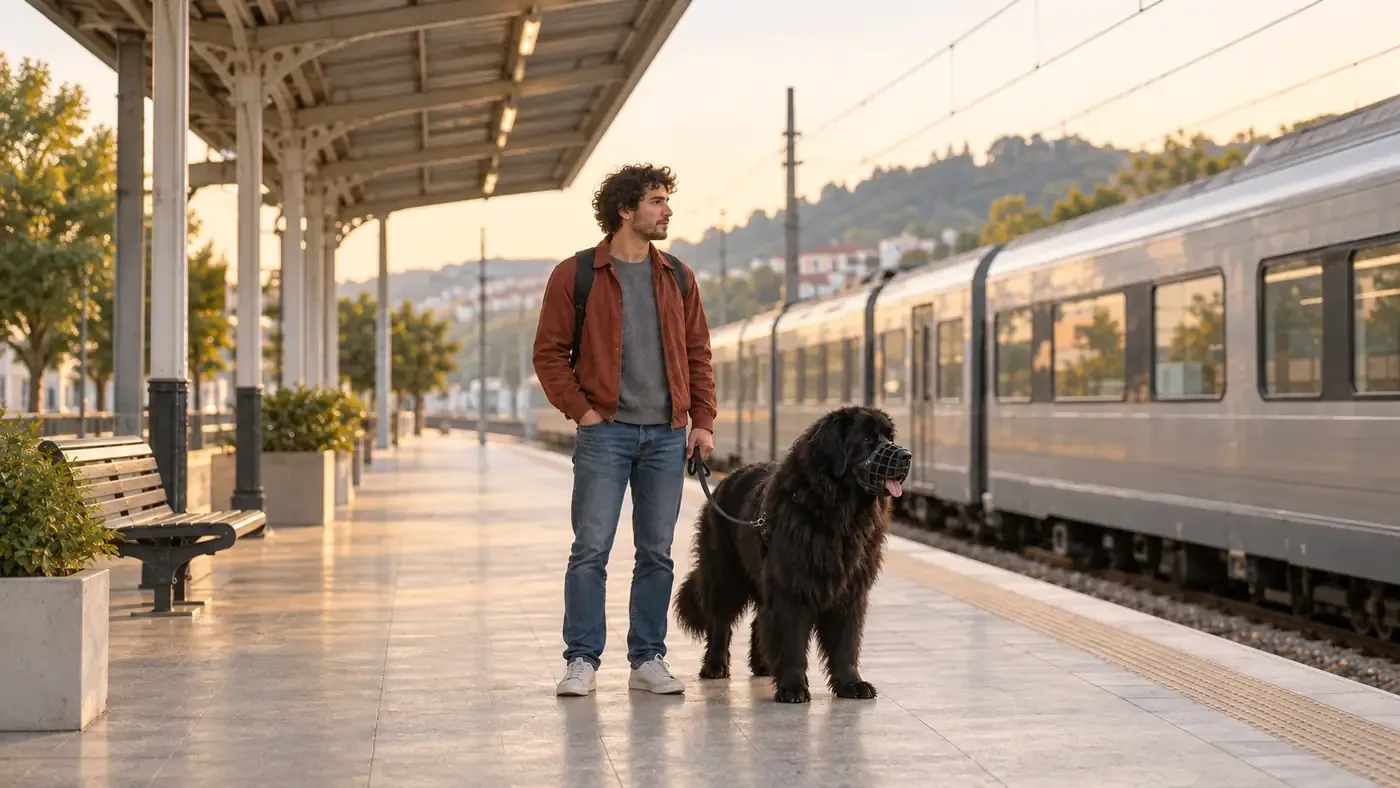
Can You Take a Large Dog on Trains in Portugal?
Can you take a large dog on trains in Portugal? Check current CP rules, documents, fares, and Lisbon and Porto Metro differences before travel safely.
Read more
People give you a wide berth before they have met your dog. Fennaro helps you find a dog and owner in Warsaw who fit your pace, energy and way of saying hello. Start with a calm walk. You two decide the rest.
A large dog does not need another stranger rushing over without warning. They need an individual dog who may respect their pace and space.
On a Fennaro profile, you describe your dog's size, energy, play style and temperament. Then you see nearby suggestions, useful similarities and honest pair-specific cautions. This is not a “safe with every dog” stamp. Fennaro provides context. Owners decide whether meeting makes sense.
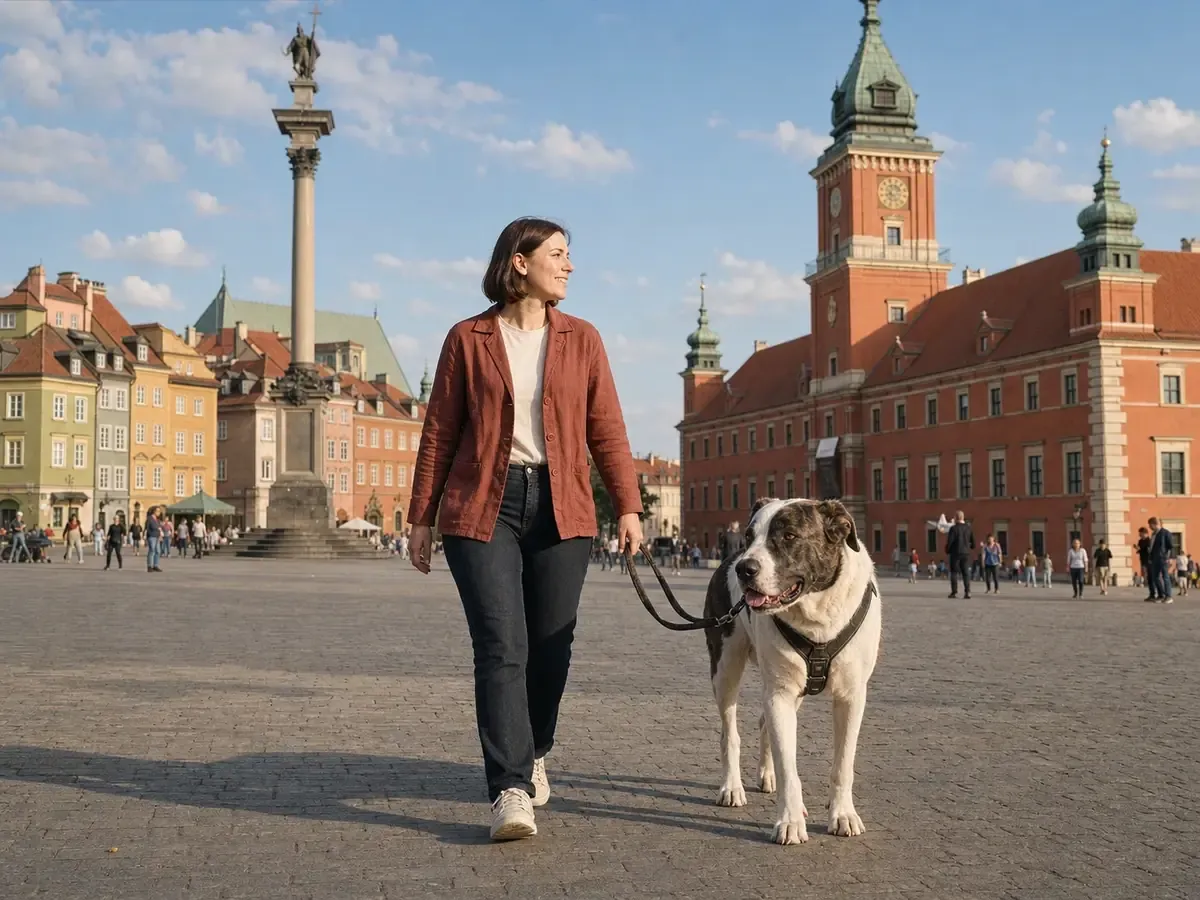
Add photos and the details that actually matter before a first meeting.
Compare size, energy, play style and temperament. Nearby discovery uses an approximate, fuzzed point. Exact locations and addresses are not shown to other users.
Mutual interest opens chat. You and the other owner then choose the district, route, distance and pace for the first walk.
In Warsaw, the type of place can change the whole meeting. A fenced run allows free movement but may make distance harder to manage. A wide route gives a parallel walk more room. Forests and nature reserves have their own rules and are not substitutes for dog runs.
Begin farther apart and walk in the same direction.
Do not force a nose-to-nose greeting.
Choose a route either person can leave or turn back on easily.
Reduce the distance only while both dogs can walk calmly.
Finish before tension becomes too much.
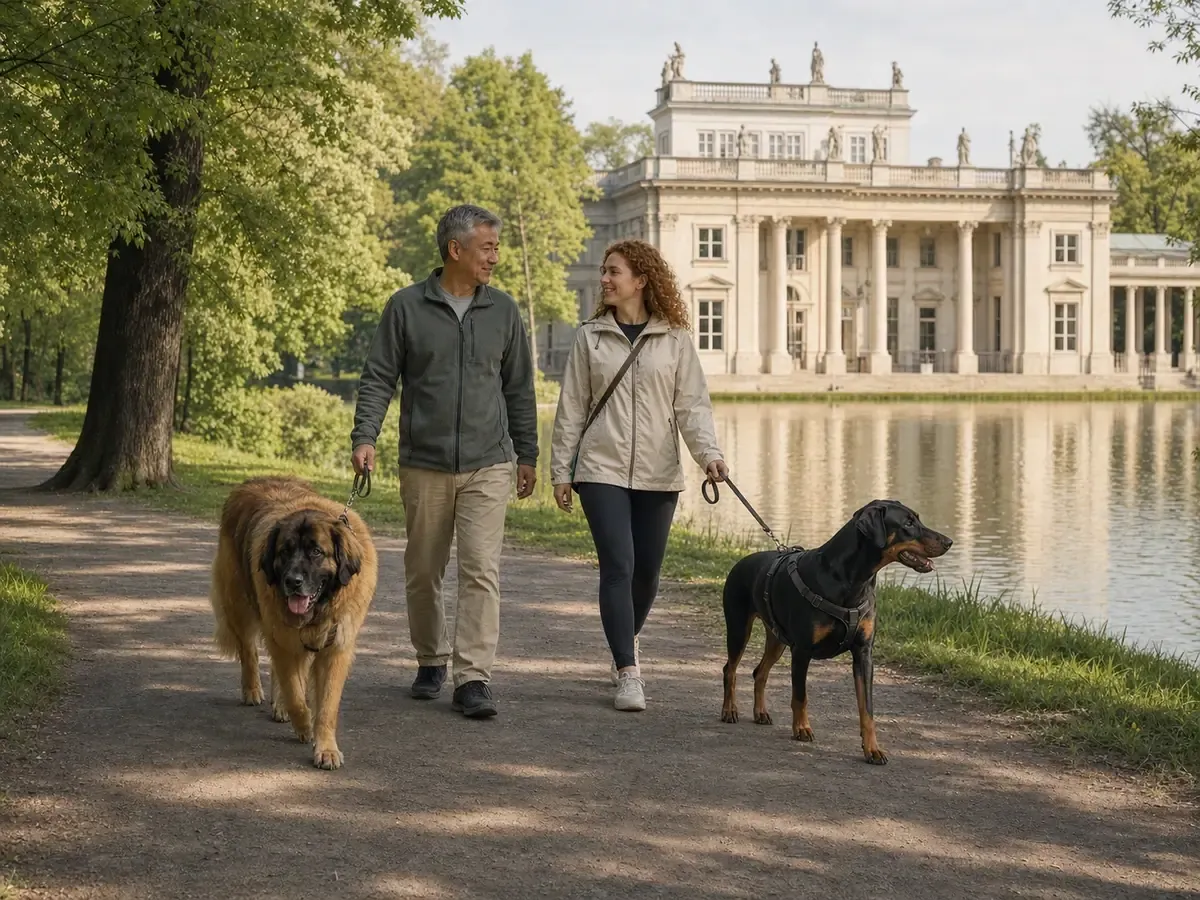
Important
A crowded run is not a compulsory character test. If a dog has a bite history, very strong reactions or cannot settle again, speak to a qualified behaviourist first.
Read our termsThis is not a list of the “best places”. It is a short map of different types of space, so you can choose somewhere that fits the individual pair.
The run in the south-eastern part of the park has fencing, a double-gate entrance, lighting, seating, bins, dog toilets, training equipment and a sensory path. The official description lists a smaller 464 m² equipment area and a larger 1,510 m² free-running area. This is a functional division, not a confirmed split by dog size.
This is not a fenced dog run. The City Greenery Authority confirms two ponds intended for dogs, one on the Ochota side and one on the Śródmieście side. Dogs should not enter the main pond or its floating islands.
There is a dog run at ul. Węglarska 41a with its own regulation. It is a useful reminder that Warsaw runs do not share one schedule or an identical set of rules.
The current Warszawa 19115 list still identifies the run on the Bohaterów Getta side. The city description lists dog equipment, seating and waste bins.
The official district page confirms a designated dog run. The description is older, so check the current city list, entrance, fencing and on-site board before visiting.
The official modernisation page confirms a dog run among the park facilities. Lighting, monitoring, seating and drinking fountains are described at park level, not as facilities inside the run.
A forest or reserve is not a dog run. State Forest rules prohibit dogs from running loose in forests, and reserve visitors must check which routes and activities are permitted.
According to the current Warszawa 19115 guidance, a dog should be kept on lead in shared public areas. A dog may be released when it is marked in a way that identifies the owner or handler, remains under control and does not endanger people, animals or road users. Waste must be removed immediately.
An aggressive animal, or one that may pose a threat, should be muzzled and handled by someone able to control it. Being large does not automatically make a dog a breed legally classified as aggressive. The national list contains 11 breeds, including the American pit bull terrier and Rottweiler. It does not name the Cane Corso, Doberman or Amstaff.
A dog older than three months must be vaccinated against rabies within 30 days of reaching three months of age, then at least every 12 months after the previous vaccination.
Warsaw does not have one citywide regulation or one opening schedule for every dog run. Always check the entrance board and current manager notice. In Wawer, the site regulation includes adult supervision, leads when entering and leaving, current vaccination, dog identification, and lead plus muzzle requirements for nationally listed breeds and their crosses.
A Facebook post may find someone in the same district. It still does not tell you whether the other dog prefers a calm approach, has similar energy or feels comfortable with a dog this size.
Fennaro is not another noticeboard. First you see the individual dog's profile, similarities and pair-specific cautions. Then you chat and choose the place and pace together.
We do not promise a perfect match or a risk-free walk. We give owners more context before the first hello, especially when a large dog gets judged before anyone knows them.
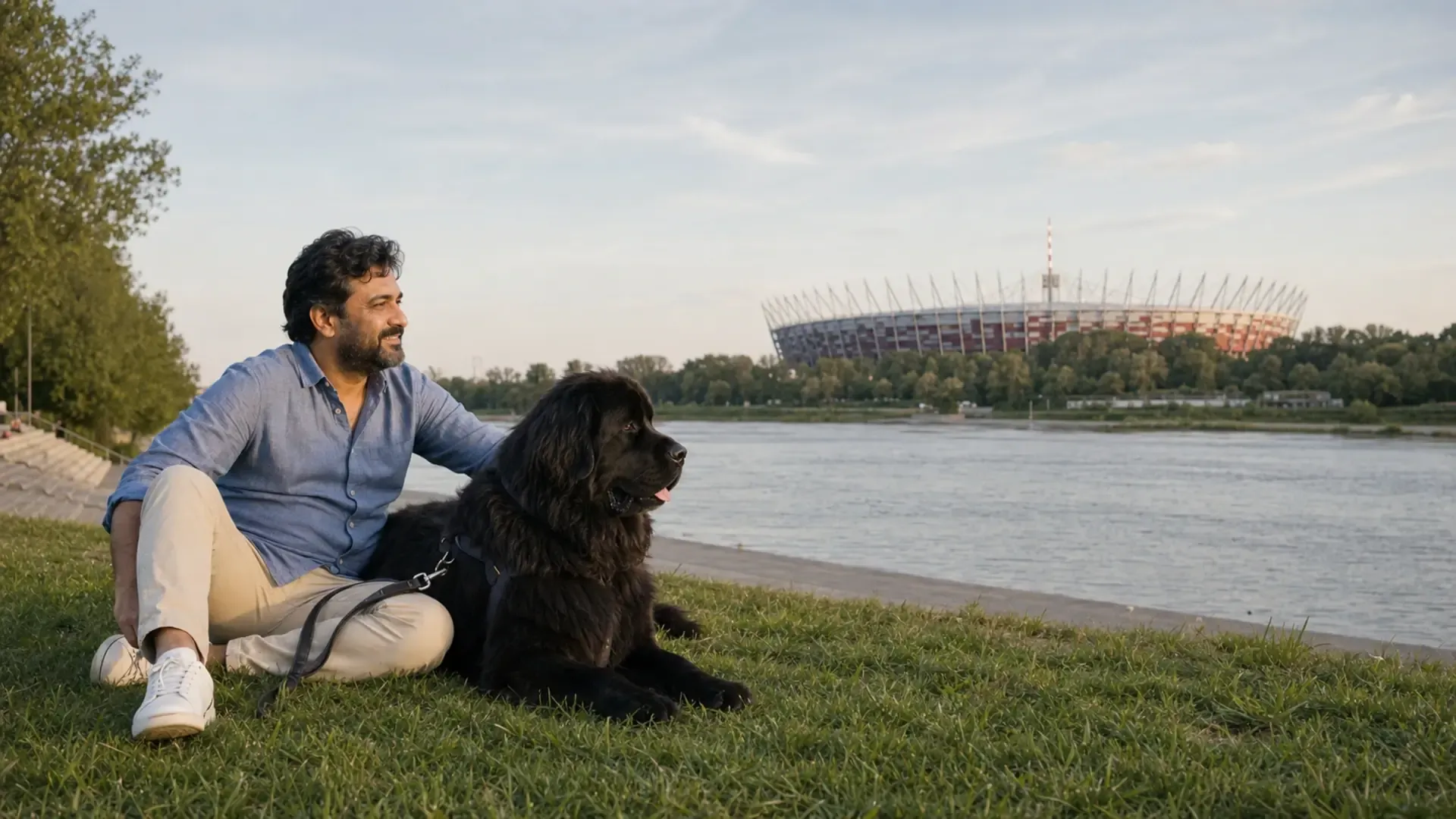
Outside a dog run, a dog may be released only when it is marked in a way that identifies the owner or handler, remains under control and does not endanger people, animals or road users. You must also follow the rules for that specific place. A dog may not run loose in a forest.
Create your dog's Fennaro profile and browse nearby dogs using size, energy, temperament and play style. Mutual interest opens chat. You and the other owner can then choose the route and plan a calm first meeting together.
The official sources checked did not confirm a current Warsaw run with separate small-dog and large-dog areas. Park Bródnowski has a smaller equipment area and a larger free-running area, but the official description does not divide them by dog size.
Not because of size alone. Warsaw's rules require a muzzle for an aggressive animal or one that may pose a threat. The national breed list applies separately. The individual dog's behaviour and any breed-specific rule matter, not size by itself.
Yes, but only the two ponds intended for dogs, one on the Ochota side and one on the Śródmieście side. Dogs should not enter the main pond or its floating islands.
Warsaw does not publish one citywide schedule for every dog run. Hours and additional rules depend on the individual facility. Before visiting, check the entrance board and any current notice from the park, district or facility manager.
Choose a wide, legally accessible route where you can keep distance, turn back and end the meeting without squeezing through a gate. A crowded fenced run usually gives you less control over space. Check the rules for the chosen park before leaving.
Do not treat a forest or nature reserve like a dog run. State Forest rules prohibit dogs from running loose in forests, and reserve visitors must also check which routes and activities are permitted. Keep the dog on lead and stay on open routes.
The official description does not say that. The smaller area contains equipment and the larger area is for free running. This is a functional division, not a confirmed small-dog and large-dog split.
The site rules require adult supervision, constant control, a lead when entering and leaving, closed gates, waste cleanup, current vaccination and dog identification. Nationally listed breeds and their crosses remain on lead and muzzled. Sick or injured dogs, females in heat and puppies under three months may not enter.
A crowded run can make distance and a calm exit difficult. Some dogs may cope better with a short parallel walk on a wide route. If the dog has a bite history, very strong reactions or cannot settle again, speak to a qualified behaviourist first.
Begin with a short walk at a distance instead of letting the puppy rush over. Give the adult dog space and take breaks. If either dog becomes stiff, hides or cannot settle, increase the distance or end the meeting.
Go during the cooler part of the day, carry water and check the ground temperature. Pole Mokotowskie has two ponds intended for dogs, but the main pond and floating islands are not for them. Check current park conditions before leaving.
Make the dog and handler easy to see, check the surface and look for current closure notices. A first meeting can be shorter, but it should still begin with more distance and a shared direction. Do not assume every run keeps the same opening hours.
Tell the other owner before you meet. Choose a wide route with an easy exit, begin farther apart and agree that either person can stop the walk without having to defend the decision. If the dog has a bite history or very strong reactions, ask a qualified behaviourist for help first.
Browse dogs in your area, see who may genuinely fit your dog and arrange a calm walk. Your decision. Your pace.